

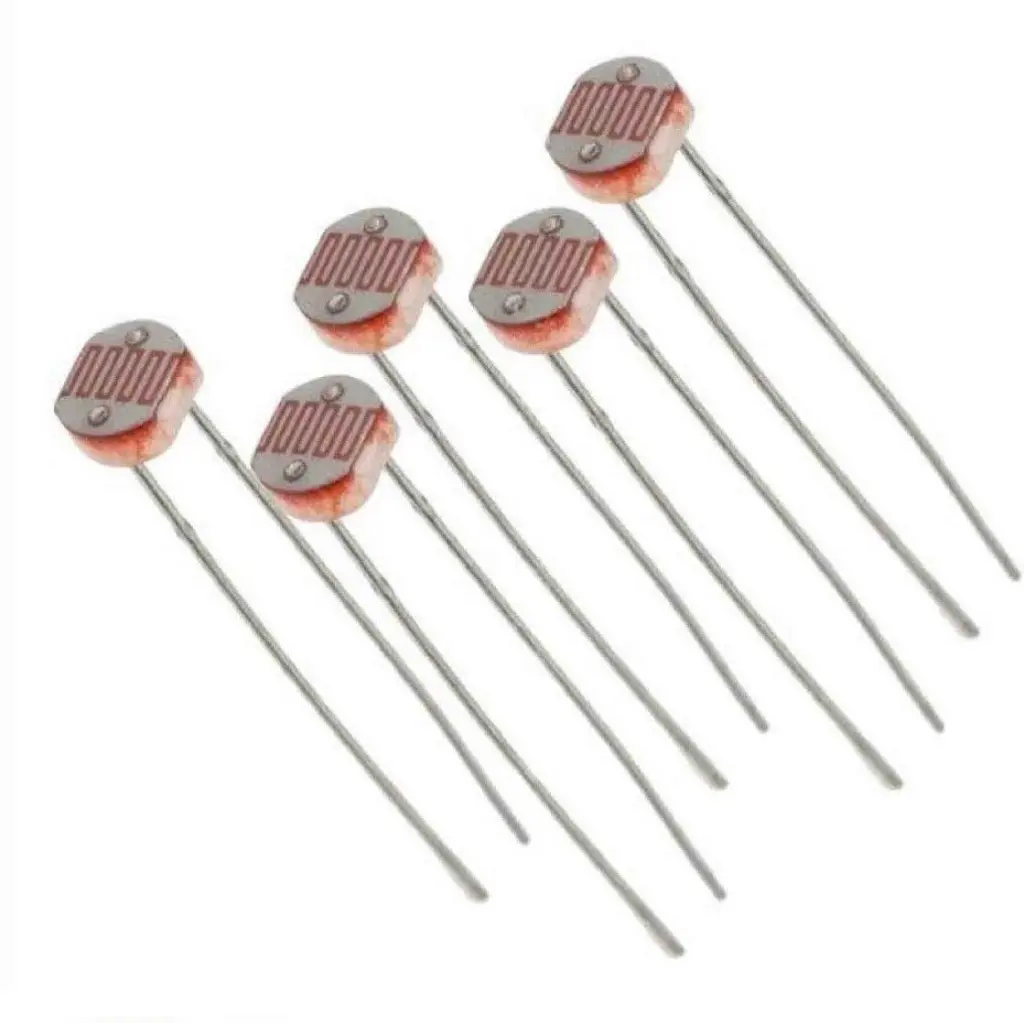
LDR 5mm (Photoresistor)
🌙 5 mm LDR (Photoresistor) – Compact Light Sensor
A compact 5 mm CdS photoresistor that changes resistance based on light intensity. Ideal for portable projects, robotics, and small-scale automation.
📊 Technical Specifications
| Parameter | Value |
|---|---|
| Diameter | ~5 mm (photosensitive area) |
| Peak Wavelength | ~560 nm (green sensitivity) |
| Light Resistance | ~3 – 10 kΩ (lux level dependent) |
| Dark Resistance | ~500 kΩ – 5 MΩ |
| Max Voltage | Typically up to 150 V DC |
| Power Rating | ~100–200 mW |
| Response Time | Rise ~25 ms, fall ~30–100 ms |
| Operating Temp Range | –30 °C to +70 °C |
| Packaging | Epoxy-coated, through-hole leads |
💡 Key Features
Compact 5 mm form-factor fits in small PCBs, wearables, and robotics
Fast response times suitable for dynamic light changes
Durable epoxy coating protects against mechanical stress
Suitable for low-cost light detection, auto brightness control, alarms, and more
🔧 Arduino Wiring Guide
Set up as a voltage divider for easy light measurement:
CopyEdit5 V ── LDR ── A0 ── 10 kΩ ── GND
CopyEditconst int LDRpin = A0; void setup() { Serial.begin(9600); } void loop() { int val = analogRead(LDRpin); Serial.println(val); delay(300); }
Use this for light-based projects like auto LEDs, alarms, or environmental sensing.
📱 App & IoT Ideas
Pair with ESP8266/ESP32 to send real-time light data to Blynk, Node-RED, or Home Assistant dashboards
Use as an analog input for Bluetooth (HC-05) controlled light systems
Integrate into wearable modules for light-based notifications
▶️ YouTube Tutorials (Copy Links)
Arduino LDR Tutorial – Voltage Divider Method
https://www.youtube.com/watch?v=Hv0zOgh7_FcHow to Use LDR with Arduino for Light Sensing Projects
https://www.youtube.com/watch?v=9VYrGY142zQ
📄 Datasheet & Reference
For detailed electrical curves and specs, download the official datasheet:
5 mm CdS LDR Datasheet PDF